When Jaroslava Havettová won the Silver Bear at Berlinale 1989 for her film Fate (Úděl, 1989), she became the first female filmmaker to receive this award. She spent several years making this eleven-minute-film which would become the artistic culmination of her previous career which began in the 1960s when the Prague native relocated to Bratislava to join her husband – El Havetta – and auditioned for the position of an animation at the Studio of Popular Science Films.
Its director, documentarist and photographer (born in Brno) Karel Křipský gave space to young artists in an effort to institutionalise and develop Slovak animation which had been limited to a few sporadic attempts until then. Havettová, along with several other aspiring filmmakers, was sent to a three-week internship at the Bratři v triku Studio where she learned the basics of animation techniques. After the team returned, it made the film Penguin (Pingvin) in 1964 which became a milestone in the history of Slovak animation.
The story was based on Ivan Popovič’s cartoon joke about a drunkard who unsuccessfully tries to commit suicide, the film was directed by Vladimír Popovič and Veronika Margótsy and its cinematographer was Igor Luther. Havettová was one of the animators of the film, which was for various reasons ultimately not released for distribution (a controversial topic, emigration of some of its authors). Despite the official ban, Penguin confirmed the assumptions that a stable environment for animation can be created in Slovakia and so in 1965, a separate Creative Group of Animated Films was established in the Studio of Popular Science Films. Within the group, Havettová began to make her own films – after animated bedtime stories for television Fakeers (Fakiri, 1966) and Mouse Castle (Myší hrad, 1966) – initially in close collaboration with Ivan Popovič.
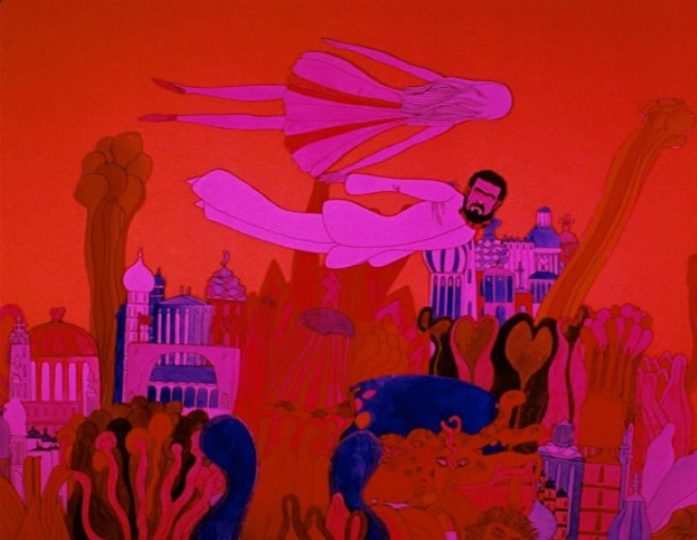
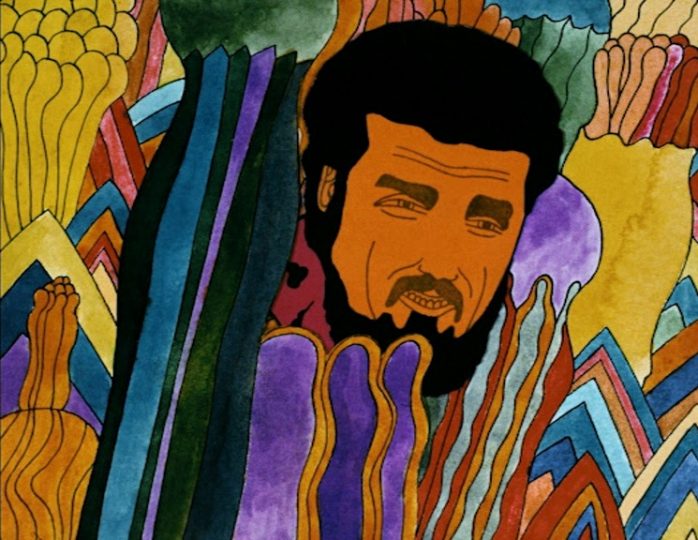
Popovič came up with an idea for a short animated commentary to the period hit song by Waldemar Matuška and Helena Vondráčková To se nikdo nedoví which would have an artistic concept in line with Western artistic trends. Inspired by Warhol’s pop-art and Edelmann’s Yellow Submarine, Popovič created artistic designs which Havettová subsequently developed using cut-out animation into a five-minute-film. Song (Pieseň, 1969) has a short opening sequence depicting party guests who are about to play some music on a tape recorder. With the first tones, we’re taken to the song’s fictional world filled with explosive colours contrasting with the black-and-white opening sequence and the static music video promoting the song on television in late 1960s. In a loving embrace ironizing the song’s lyrics, the animated characters of Matuška and Vondráčková fly through an imaginary landscape full of fantastic flowers, animals and architecture. The surreal scenes in bright colours evoke a psychedelic trip of ‘the golden sixties’ at a time of rising distress of the Normalisation period.
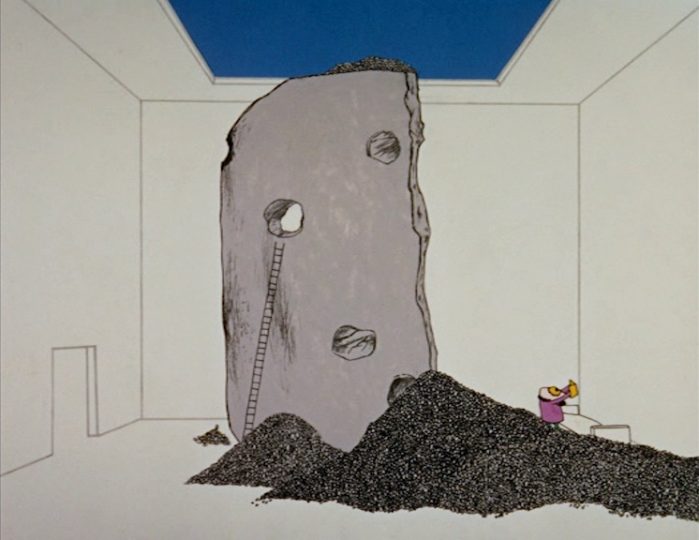
In their following film, Statue (Socha, 1970), Havettová and Popovič decided to accentuate the current social climate. The change in atmosphere is already apparent in the film’s artistic style: instead of the colours and dynamics of Song, we see predominantly black-and-white images, the closed space of a single room and a simple frontal perspective. We follow a man who took Michelangelo’s statement ‘In every stone there is a statue hidden’ literally and tries to carve a work of art from a piece of rock. And as he is hopelessly untalented, the result of his stubborn effort is a big pile of rubble. The theme of destruction is amplified in the film’s score which breaks down Tchaikovsky’s Piano Concerto No. 1 in B minor to isolated unconnectable bars. Using a simple shortcut, Havettová created an effective metaphor of dull dogmatism and careerism of people who began to rise to power through party vetting. When it, paradoxically, entered distribution in the early 1970s, Statue received a good response from the audiences. It also became Havettová’s first work to win several awards at various film festivals, albeit only in Czechoslovakia.
But censorship affected the film Until the Handle Breaks Off (Kým sa ucho neodbije, 1971) whose artistic style based on the folk art of Haban ceramics was created by Havettová herself. The prologue of the film, which compares craftsmanship to the biblical act of creation of the world, didn’t pass the approval process and had to be replaced by a self-reflective introduction depicting the preparation for filming. The film itself is a series of animated motifs from ceramics retelling the story of Adam and Eve set in the Slovak countryside. Despite censorship, the religious theme in Until the Handle Breaks Off is implicitly presented in some situations and in the voice-over by the Radošín Naïve Theatre which is a variation on folklore traditions influenced by Christian ethics.
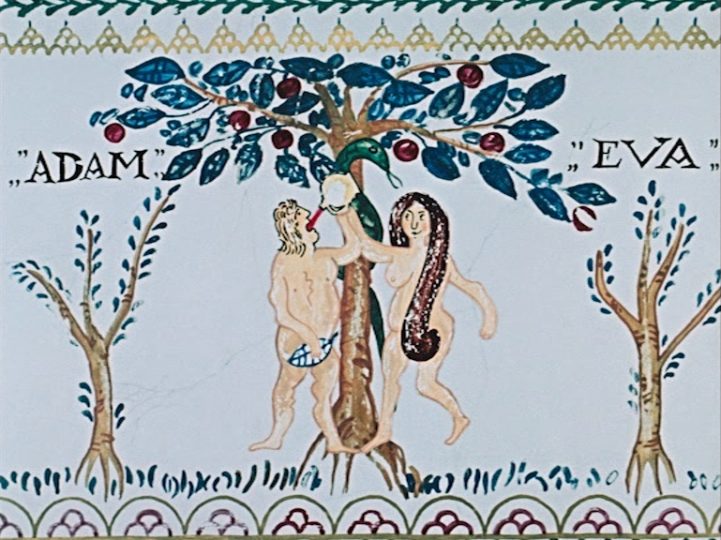
After finishing the film, Havettová submitted two proposals to the studio which were not approved: an experiment titled Life Itself Writes Stories Like This (Sám život píše podobné příběhy) in which live actors were supposed to transform in their own caricatures, and Jááánošík inspired by satiric cartoons by Fedor Vico which were banned during the Normalisation. In 1972, Havettová left the studio after a disagreement with its political leadership and became a freelancer, making two animated bedtime stories for Košice television. She returned to film in the late 1970s with her film Contacts (Kontatky, 1980) foreshadowing the peak of her career.
Literature:
Petr Zvoníček, Kreslené kontakty Jaroslavy Havettové. Film a doba 29, 1982, no. 11, pp. 653–655.
Rudolf Urc, Jaroslava Havettová. Prvá dáma slovenského animovaného filmu. Homo Felix, 2011, no. 2, pp. 32–45.
Maroš Brojo, Interview with Jaroslav Havettová. Homo Felix 2011, no. 2.
Zdena Škapová, Stříbrný medvěd pro 11 000 obrázků. In: Stanislav Ulver (ed.), Animace a doba. Prague: Sdružení přátel odborného filmového tisku 2004, pp. 291–294.
Václav Macek – Jelena Paštéková, Dejiny slovenskej kinematografie. Bratislava: Slovak Film Institute, 2016.
Rudolf Urc – Marián Veselý, Slovenský animovaný film. Bratislava: FOTOFO 1994.